
Common Tax Filing Mistakes That Can Delay Your Refund in Canada
Published: July 2026
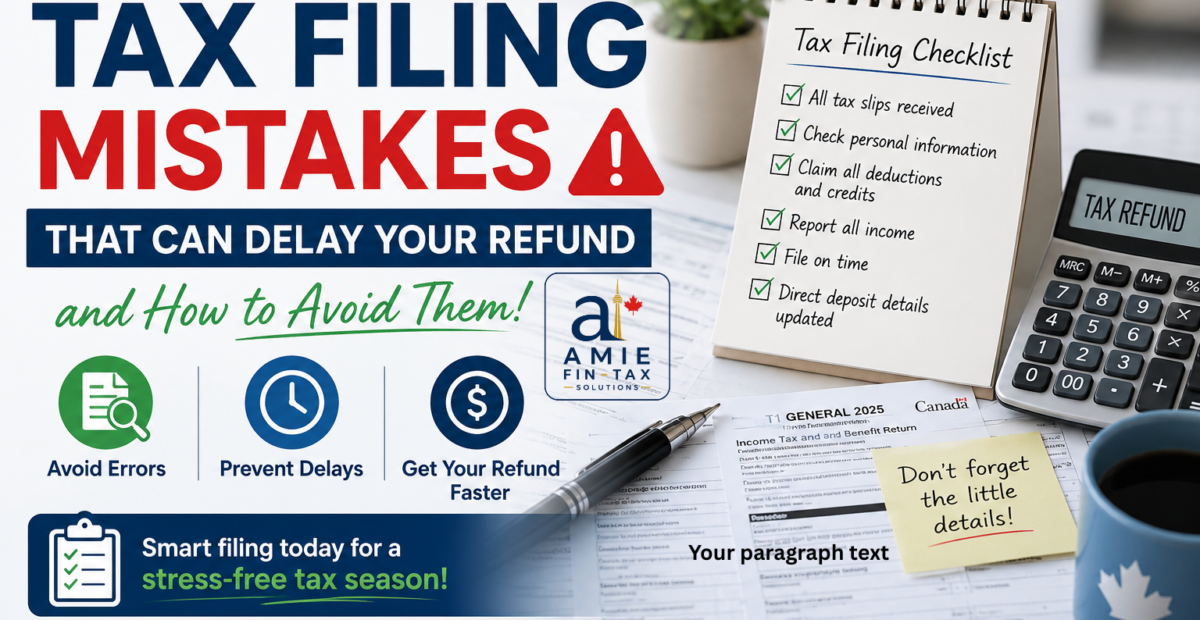
Tax season can be stressful, and even small mistakes on your income tax return can delay your refund or result in additional reviews by the Canada Revenue Agency (CRA). Whether you’re filing your taxes yourself or working with a tax professional, taking a few extra minutes to review your return can save you time and frustration.
Here are some of the most common tax filing mistakes Canadians should avoid in 2026.
1. Filing Before You Receive All Your Tax Slips
Many taxpayers file early to receive their refunds faster. However, filing before receiving all required tax slips—such as T4s, T5s, T3s, or RRSP contribution receipts—can result in missing income or deductions.
Tip: Ensure you’ve received all your tax documents before submitting your return.
2. Entering Incorrect Personal Information
Simple errors like an incorrect Social Insurance Number (SIN), date of birth, address, or banking information can delay processing.
Before filing, verify that your personal information is accurate and up to date.
3. Forgetting to Claim Eligible Tax Credits
Many Canadians miss valuable credits and deductions every year.
Some commonly overlooked claims include:
- RRSP contributions
- Medical expenses
- Charitable donations
- Childcare expenses
- Tuition amounts
- Union or professional dues
- Disability Tax Credit (if eligible)
Claiming every deduction you’re entitled to can reduce your tax bill or increase your refund.
4. Reporting Incorrect Income
All taxable income must be reported, including:
- Employment income
- Self-employment income
- Investment income
- Rental income
- Pension income
The CRA receives copies of many tax slips directly from employers and financial institutions, making discrepancies easy to identify.
5. Missing the Tax Filing Deadline
Most Canadians must file their income tax return by April 30 each year. Self-employed individuals generally have until June 15 to file, but any balance owing is still due by April 30.
Filing late can result in penalties and interest if taxes are owed.
6. Forgetting to Update Direct Deposit Information
If your banking information has changed, your refund could be delayed.
Keeping your direct deposit details current with the CRA helps ensure you receive refunds and benefit payments quickly.
7. Not Keeping Supporting Documents
Although you don’t submit receipts with your tax return, the CRA may request them later.
Keep records such as:
- Medical receipts
- Donation receipts
- RRSP contribution receipts
- Childcare receipts
- Business expense records
It’s recommended to keep these documents for at least six years.
8. Ignoring CRA Notices
If the CRA contacts you requesting additional information, respond promptly. Ignoring requests can delay your refund or lead to reassessments.
Review your Notice of Assessment carefully after your return is processed.
Tips for a Faster Tax Refund
To help receive your refund sooner:
- File electronically using NETFILE.
- Sign up for direct deposit.
- Double-check all personal information.
- Include all income and tax slips.
- Claim every deduction and credit you’re eligible for.
- File your return before the deadline.
Need Professional Tax Assistance?
Preparing an accurate tax return doesn’t have to be stressful. At Amie Fin Tax Solutions, we help individuals, families, and self-employed Canadians prepare accurate returns while maximizing eligible deductions and credits.
Whether you need help filing your taxes or have questions about your tax situation, our experienced team is here to assist.
Contact Amie Fin Tax Solutions today to make tax season simple and stress-free.
This article is general information based on published CRA figures and is not tax, legal or financial advice. Confirm details for your situation before acting.